Titel Zutaten für die Zukunft
Herausgeber Messe Frankfurt Exhibition GmbH
Paperworld, Ludwig-Erhard-Anlage 1, 60327 Frankfurt am Main
Konzept André Schmidt, MATTER
Gestaltung Luciana Siggel
Redaktion/Text Ludwig Engel, André Schmidt ("Oben sitzt der Chef": Stefan Carsten, Ludwig Engel)
Übersetzung Alan Connor
Druck Messe Frankfurt Medien und Service GmbH
Copyright Messe Frankfurt Exhibition GmbH 2017
[:en]Title Zutaten für die Zukunft
Publisher Messe Frankfurt Exhibition GmbH
Paperworld, Ludwig-Erhard-Anlage 1, 60327 Frankfurt am Main
Concept André Schmidt, MATTER
Design Luciana Siggel
Editorial/Text Ludwig Engel, André Schmidt ("Oben sitzt der Chef": Stefan Carsten, Ludwig Engel)
Translation Alan Connor
Print Messe Frankfurt Medien und Service GmbH
Copyright Messe Frankfurt Exhibition GmbH 2017
[:]Zutaten für die Zukunft
Immer wieder wurde und wird das „Ende der Arbeit, wie wir sie kennen“ durch Globalisierung, Automatisierung, Digitalisierung, Individualisierung usw. ausgerufen. Und klar, die Effekte dieser Entwicklungen sind nicht zu übersehen: Jeder checkt heute seine E-Mails von überall, ist auf vielen Social-Media-Plattformen gleichzeitig präsent und arbeitet im Café und am Flughafen, ist so gut wie immer im Job und in der Freizeit erreichbar. Vor dem Hintergrund dieser massiven Veränderungen unserer Arbeitswelten wird regelmäßig ein Ort grundsätzlich infrage gestellt, an dem ein Großteil unserer Gesellschaft trotz aller neuen tools und devices seine Arbeiten nach wie vor verrichtet: Das Büro. Denn wozu, so lautet die Frage, braucht es denn noch diesen antiquierten Ort, an dem die Angestellten nach standardisierten Regeln arbeiten und an standardisierten Arbeitsplätzen sitzen, wenn sie doch ihren hochgradig spezialisierten und individualisierten Tätigkeiten überall anders vielleicht sogar besser nachgehen können? Aber trotz E-Mail, Smartphone und Home-Office widersetzt sich das Büro als Ort des Austauschs mit Kollegen, als geregelter Rahmen für gemeinsam zu absolvierende Arbeitsprozesse und als identitätsstiftender Kern für die Mitarbeiter eines Unternehmens bisher seiner vielfach proklamierten Auflösung. Und so bleibt bis heute die Frage nach dem „Büro der Zukunft“ eng mit der Frage verbunden, wie wir in Zukunft als Individuen gemeinsam arbeiten wollen und arbeiten werden.
Das Spannungsverhältnis, in dem sich das „Büro der Zukunft“ entwickelt, ist dabei durch ein ständiges Abwägen bestimmt, welche Maßnahmen einerseits für die Mitarbeiter attraktive Arbeitsbedingungen schaffen, andererseits zu einer Produktivitätsverbesserung der geleisteten Arbeit führen. Im zunehmenden „Wettbewerb der Talente“ einer sich stetig verkleinernden workforce in Europa richtet sich gegenwärtig dabei der Fokus auf die Vorlieben der „Millennials”, der heute zwischen 20- und 35-jährigen. Für sie ist der Firmenwagen und das 13. Monatsgehalt immer weniger ein Entscheidungsgrund für eine Karriere in einem Unternehmen. Vielmehr zeichnet sich ein Trend zu weniger Karrierestreben und zu mehr Work-Life-Balance ab. In einer Welt, in der alle als sicher und unzerstörbar angesehenen Stützen wie die Rente, Banken und Zinsen auf Erspartes und auch jegliche Art von Qualifikation als sicheres Investment zur Disposition stehen, zählen für die Millennials andere Werte, die greifbarer zur Verbesserung von Lebensqualität führen. Dazu gehört auch ein attraktives und gesundes Arbeitsumfeld.
[:en]Ingredients for the future
On account of globalization, automation, digitization, individualization, etc. The "end of work as we know it" is proclaimed over and over again. And true enough, the effects of these developments cannot be overlooked: Everyone checks his or her emails from just about anywhere these days, is simultaneously present on a variety of social media platforms, works while sitting in a café or at the airport, is nearly always reachable during work or free time. Against the background of these massive changes in our working environment, one place where the majority of us still perform our daily work— despite all the new tools and services available to us—is regularly called into question: the office. For what reason, the question goes, do we still need this antiquated place, where employees work according to standardized rules and sit at standardized workplaces, if they can do their highly-specialized and individualized activities anywhere else possibly even better? But despite email, smartphones, and home offices, the office still defies its frequently proclaimed dissolution as an arena for exchanges with colleagues, as a regulated setting for joint work processes, and as an identity-building core for a company's employees. And so to this day, the question on the “office of the future” remains closely linked to the question of how, as individuals, we want to and will work together in the future.
The permanent state of tension in which the “office of the future” is developing is determined, on the one hand, by the constant weighing-up of which measures provide attractive working conditions for employees and, on the other, which measures lead to an improvement in productivity of the work performed. In the increasing “competition for talent” in an ever-diminishing workforce in Europe, the focus is currently on the preferences of the “millennials”, today's 20 to 35-year olds. For them, a company car and a 13th bonus salary at year-end represent less and less an incentive for choosing a career with a company. Instead, an increasing trend towards less careerism and greater work-life balance is emerging. In a world in which all things previously considered as safe and indestructible investments such as pensions, banks, interest on savings, and any kind of qualification, are all up for grabs, other values that lead to tangible improvements in the quality of life are what count for the millennials. This includes an attractive and healthy working environment.
[:]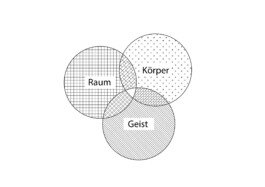
Demgegenüber steht die Frage, wie Büros ökonomischer genutzt werden können: Eine bessere Auslastung der vorhandenen Arbeitsplätze und die dynamische Nutzung der Büroflächen ist von vitalem Interesse für jedes Unternehmen. Hinzu kommt die Frage, wie man sich neuen Technologien anpasst und zugleich für die Zukunft flexibel bleibt. Hier geht es zum einen um die Hardware, also die Räume mit ihren Wänden, Böden und Decken, die für zukünftige technologische Erneuerungen umrüstbar bleiben müssen, aber auch um die Integration des zweiten und dritten Arbeitsplatzes, also des Home-Office und der virtuellen Arbeitswelt.
Für die Sonderschau „Büro der Zukunft“ der Paperworld 2017 hat das Team des Architekturbüros MATTER aus Berlin ein Environment entworfen, was sich jenseits technischer Zukunftsspekulationen mit den gesellschaftlich relevanten Werteverschiebungen der Büroarbeiter und der räumlichen Konsequenzen für das Büro beschäftigt. Das Architektenteam hat sich dafür intensiv mit der architektonischen Ausgestaltung der gegenwärtigen Bürolandschaft auseinandergesetzt und versucht zentrale Momente zu identifizieren, die über kurzfristige Trends hinausweisen und viel mehr grundlegende Qualitäten einer angenehmen, innovations- und produktivitätssteigernden Büroarbeit aufzeigen.
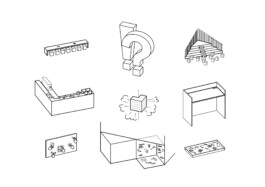
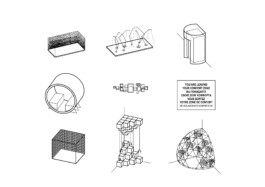
Natürlich wird es nicht das eine Büro, diese eine Art zu Arbeiten geben, sondern jedes Unternehmen und jede Branche wird weiterhin Besonderheiten ausweisen, die nicht durch ein Konzept überdeckt werden sollen. Vielmehr gilt es, sich mit den einzelnen Faktoren für ein gutes Arbeitsklima im eigenen Betrieb auseinanderzusetzen, gezielt Schwachstellen zu verbessern und durch strategische Veränderungen einen reibungslosen Übergang in die Zukunft zu ermöglichen. So zeigt die Sonderschau eben auch kein einheitliches „Büro der Zukunft“, sondern widmet sich in 18 Stationen wichtigen Aspekten des Büros, die heute besonders zukunftsweisend erscheinen. Das typische Büro wird dafür in seine Einzelteile zerlegt und schafft in der isolierten Darstellung der einzelnen Komponenten Raum für Imagination und Neukombination. Es geht um die Präsentation von Zutaten, aus denen jeder sich sein eigenes Büro der Zukunft zusammenstellen kann.
[:en]
Contrasting this is the question of how offices can be used more economically: A better utilization of existing workplaces and the dynamic use of the office space is of vital interest for every company. Then there is the question of how to adapt to new technologies, yet remain flexible for the future at the same time. This concerns the hardware for one, i.e. the rooms and their walls, floors and ceilings, which must remain modifiable for future technological innovations, but also the integration of the second and third workplaces—the home office and the virtual workplace.
For the special exhibition “Office of the Future” at Paperworld 2017, the leading international trade fair for office solutions, a team from MATTER architect's office in Berlin has created an environment that deals with the socially-relevant value shifts of office workers, and the spatial consequences for the office that goes beyond technical speculations on the future. The team of architects has dealt intensively with the architectural configuration of the current office environment and tried to identify key moments that point beyond short-term trends, and far more demonstrate the fundamental qualities of pleasant, innovative and productivity-enhancing office work.
Of course, there will not just be the one office, not one way of working; every company and industry will still have characteristics that should not be covered over by a concept. Instead, the goal is far more to grapple with the individual factors for a good working environment in one’s own company, to improve weak spots in a targeted way, and to enable a smooth transition into the future through strategic changes. Accordingly, the special exhibition refrains from showing a uniform “office of the future”, and instead dedicates itself at 18 stations to important aspects of the office that today seem particularly indicative of the future. The typical office is broken down for the purpose into its individual components and, through the isolated representation of the individual components, creates room for imagination and new combinations. It is about presenting ingredients from which everyone can piece together their own office of the future.
[:]

Titel Zutaten für die Zukunft
Herausgeber Messe Frankfurt Exhibition GmbH
Paperworld, Ludwig-Erhard-Anlage 1, 60327 Frankfurt am Main
Konzept André Schmidt, MATTER
Gestaltung Luciana Siggel
Redaktion/Text Ludwig Engel, André Schmidt ("Oben sitzt der Chef": Stefan Carsten, Ludwig Engel)
Übersetzung Alan Connor
Druck Messe Frankfurt Medien und Service GmbH
Copyright Messe Frankfurt Exhibition GmbH 2017
[:en]Title Zutaten für die Zukunft
Publisher Messe Frankfurt Exhibition GmbH
Paperworld, Ludwig-Erhard-Anlage 1, 60327 Frankfurt am Main
Concept André Schmidt, MATTER
Design Luciana Siggel
Editorial/Text Ludwig Engel, André Schmidt ("Oben sitzt der Chef": Stefan Carsten, Ludwig Engel)
Translation Alan Connor
Print Messe Frankfurt Medien und Service GmbH
Copyright Messe Frankfurt Exhibition GmbH 2017
[:]Zutaten für die Zukunft
Immer wieder wurde und wird das „Ende der Arbeit, wie wir sie kennen“ durch Globalisierung, Automatisierung, Digitalisierung, Individualisierung usw. ausgerufen. Und klar, die Effekte dieser Entwicklungen sind nicht zu übersehen: Jeder checkt heute seine E-Mails von überall, ist auf vielen Social-Media-Plattformen gleichzeitig präsent und arbeitet im Café und am Flughafen, ist so gut wie immer im Job und in der Freizeit erreichbar. Vor dem Hintergrund dieser massiven Veränderungen unserer Arbeitswelten wird regelmäßig ein Ort grundsätzlich infrage gestellt, an dem ein Großteil unserer Gesellschaft trotz aller neuen tools und devices seine Arbeiten nach wie vor verrichtet: Das Büro. Denn wozu, so lautet die Frage, braucht es denn noch diesen antiquierten Ort, an dem die Angestellten nach standardisierten Regeln arbeiten und an standardisierten Arbeitsplätzen sitzen, wenn sie doch ihren hochgradig spezialisierten und individualisierten Tätigkeiten überall anders vielleicht sogar besser nachgehen können? Aber trotz E-Mail, Smartphone und Home-Office widersetzt sich das Büro als Ort des Austauschs mit Kollegen, als geregelter Rahmen für gemeinsam zu absolvierende Arbeitsprozesse und als identitätsstiftender Kern für die Mitarbeiter eines Unternehmens bisher seiner vielfach proklamierten Auflösung. Und so bleibt bis heute die Frage nach dem „Büro der Zukunft“ eng mit der Frage verbunden, wie wir in Zukunft als Individuen gemeinsam arbeiten wollen und arbeiten werden.
Das Spannungsverhältnis, in dem sich das „Büro der Zukunft“ entwickelt, ist dabei durch ein ständiges Abwägen bestimmt, welche Maßnahmen einerseits für die Mitarbeiter attraktive Arbeitsbedingungen schaffen, andererseits zu einer Produktivitätsverbesserung der geleisteten Arbeit führen. Im zunehmenden „Wettbewerb der Talente“ einer sich stetig verkleinernden workforce in Europa richtet sich gegenwärtig dabei der Fokus auf die Vorlieben der „Millennials”, der heute zwischen 20- und 35-jährigen. Für sie ist der Firmenwagen und das 13. Monatsgehalt immer weniger ein Entscheidungsgrund für eine Karriere in einem Unternehmen. Vielmehr zeichnet sich ein Trend zu weniger Karrierestreben und zu mehr Work-Life-Balance ab. In einer Welt, in der alle als sicher und unzerstörbar angesehenen Stützen wie die Rente, Banken und Zinsen auf Erspartes und auch jegliche Art von Qualifikation als sicheres Investment zur Disposition stehen, zählen für die Millennials andere Werte, die greifbarer zur Verbesserung von Lebensqualität führen. Dazu gehört auch ein attraktives und gesundes Arbeitsumfeld.
[:en]Ingredients for the future
On account of globalization, automation, digitization, individualization, etc. The "end of work as we know it" is proclaimed over and over again. And true enough, the effects of these developments cannot be overlooked: Everyone checks his or her emails from just about anywhere these days, is simultaneously present on a variety of social media platforms, works while sitting in a café or at the airport, is nearly always reachable during work or free time. Against the background of these massive changes in our working environment, one place where the majority of us still perform our daily work— despite all the new tools and services available to us—is regularly called into question: the office. For what reason, the question goes, do we still need this antiquated place, where employees work according to standardized rules and sit at standardized workplaces, if they can do their highly-specialized and individualized activities anywhere else possibly even better? But despite email, smartphones, and home offices, the office still defies its frequently proclaimed dissolution as an arena for exchanges with colleagues, as a regulated setting for joint work processes, and as an identity-building core for a company's employees. And so to this day, the question on the “office of the future” remains closely linked to the question of how, as individuals, we want to and will work together in the future.
The permanent state of tension in which the “office of the future” is developing is determined, on the one hand, by the constant weighing-up of which measures provide attractive working conditions for employees and, on the other, which measures lead to an improvement in productivity of the work performed. In the increasing “competition for talent” in an ever-diminishing workforce in Europe, the focus is currently on the preferences of the “millennials”, today's 20 to 35-year olds. For them, a company car and a 13th bonus salary at year-end represent less and less an incentive for choosing a career with a company. Instead, an increasing trend towards less careerism and greater work-life balance is emerging. In a world in which all things previously considered as safe and indestructible investments such as pensions, banks, interest on savings, and any kind of qualification, are all up for grabs, other values that lead to tangible improvements in the quality of life are what count for the millennials. This includes an attractive and healthy working environment.
[:]Demgegenüber steht die Frage, wie Büros ökonomischer genutzt werden können: Eine bessere Auslastung der vorhandenen Arbeitsplätze und die dynamische Nutzung der Büroflächen ist von vitalem Interesse für jedes Unternehmen. Hinzu kommt die Frage, wie man sich neuen Technologien anpasst und zugleich für die Zukunft flexibel bleibt. Hier geht es zum einen um die Hardware, also die Räume mit ihren Wänden, Böden und Decken, die für zukünftige technologische Erneuerungen umrüstbar bleiben müssen, aber auch um die Integration des zweiten und dritten Arbeitsplatzes, also des Home-Office und der virtuellen Arbeitswelt.
Für die Sonderschau „Büro der Zukunft“ der Paperworld 2017 hat das Team des Architekturbüros MATTER aus Berlin ein Environment entworfen, was sich jenseits technischer Zukunftsspekulationen mit den gesellschaftlich relevanten Werteverschiebungen der Büroarbeiter und der räumlichen Konsequenzen für das Büro beschäftigt. Das Architektenteam hat sich dafür intensiv mit der architektonischen Ausgestaltung der gegenwärtigen Bürolandschaft auseinandergesetzt und versucht zentrale Momente zu identifizieren, die über kurzfristige Trends hinausweisen und viel mehr grundlegende Qualitäten einer angenehmen, innovations- und produktivitätssteigernden Büroarbeit aufzeigen.
Natürlich wird es nicht das eine Büro, diese eine Art zu Arbeiten geben, sondern jedes Unternehmen und jede Branche wird weiterhin Besonderheiten ausweisen, die nicht durch ein Konzept überdeckt werden sollen. Vielmehr gilt es, sich mit den einzelnen Faktoren für ein gutes Arbeitsklima im eigenen Betrieb auseinanderzusetzen, gezielt Schwachstellen zu verbessern und durch strategische Veränderungen einen reibungslosen Übergang in die Zukunft zu ermöglichen. So zeigt die Sonderschau eben auch kein einheitliches „Büro der Zukunft“, sondern widmet sich in 18 Stationen wichtigen Aspekten des Büros, die heute besonders zukunftsweisend erscheinen. Das typische Büro wird dafür in seine Einzelteile zerlegt und schafft in der isolierten Darstellung der einzelnen Komponenten Raum für Imagination und Neukombination. Es geht um die Präsentation von Zutaten, aus denen jeder sich sein eigenes Büro der Zukunft zusammenstellen kann.
[:en]
Contrasting this is the question of how offices can be used more economically: A better utilization of existing workplaces and the dynamic use of the office space is of vital interest for every company. Then there is the question of how to adapt to new technologies, yet remain flexible for the future at the same time. This concerns the hardware for one, i.e. the rooms and their walls, floors and ceilings, which must remain modifiable for future technological innovations, but also the integration of the second and third workplaces—the home office and the virtual workplace.
For the special exhibition “Office of the Future” at Paperworld 2017, the leading international trade fair for office solutions, a team from MATTER architect's office in Berlin has created an environment that deals with the socially-relevant value shifts of office workers, and the spatial consequences for the office that goes beyond technical speculations on the future. The team of architects has dealt intensively with the architectural configuration of the current office environment and tried to identify key moments that point beyond short-term trends, and far more demonstrate the fundamental qualities of pleasant, innovative and productivity-enhancing office work.
Of course, there will not just be the one office, not one way of working; every company and industry will still have characteristics that should not be covered over by a concept. Instead, the goal is far more to grapple with the individual factors for a good working environment in one’s own company, to improve weak spots in a targeted way, and to enable a smooth transition into the future through strategic changes. Accordingly, the special exhibition refrains from showing a uniform “office of the future”, and instead dedicates itself at 18 stations to important aspects of the office that today seem particularly indicative of the future. The typical office is broken down for the purpose into its individual components and, through the isolated representation of the individual components, creates room for imagination and new combinations. It is about presenting ingredients from which everyone can piece together their own office of the future.
[:]