Titel Das Smarte Büro
Herausgeber Messe Frankfurt Exhibition GmbH
Paperworld, Ludwig-Erhard-Anlage 1, 60327 Frankfurt am Main
Konzept MATTER Schmidt Fach Architekten und Stadtplaner PartGmbB
Gestaltung Julia Neller
Redaktion/Text Ludwig Engel, Stefan Carsten, Joris Fach, André Schmidt
Übersetzung Alan Connor, alcon-translate
Druck Messe Frankfurt Medien und Service GmbH
Copyright Messe Frankfurt Exhibition GmbH 2019
[:en]Title Das Smarte Büro
Publisher Messe Frankfurt Exhibition GmbH
Paperworld, Ludwig-Erhard-Anlage 1, 60327 Frankfurt am Main
Concept MATTER Schmidt Fach Architekten und Stadtplaner PartGmbB
Design Julia Neller
Editorial/Text Ludwig Engel, Stefan Carsten, Joris Fach, André Schmidt
Translation Alan Connor, alcon-translate
Print Messe Frankfurt Medien und Service GmbH
Copyright Messe Frankfurt Exhibition GmbH 2019
[:]Smart Solutions
„Smart Solutions“ sind möglichst intelligente Lösungen praktischer Probleme. Auf der Sonderschau der Paperworld 2020 wird das Thema „Smart Solutions“ durch altbekannte Arbeitsmittel, sowie informationstechnologische Werkzeuge neu beleuchtet. Es werden analoge und digitale Lösungen präsentiert. Altes wird nicht einfach durch Neues ersetzt, sondern beides als Instrument und Grundlage einer immer vielfältiger werdenden Arbeitswelt diskutiert.
Wer heute in Bezug auf den Büroalltag von “Smart Solutions” spricht, meint allerdings meistens zunächst einmal die digitalen Werkzeuge des Informationszeitalters. Und in der Tat: wir habe unsere Arbeitsprozesse ein ganzes Stück weit in die virtuelle Welt der Computer und Datenwolken verlegt. Prozesse wurden entmaterialisiert und damit auch zu einem gewissen Grade unsichtbar.
Als Reaktion darauf zeichnet sich ein verstärktes Bewusstsein für die Komplexität unseres Berufsalltags ab, sowie der Wusch, sich bei aller Informationsflut auf das Wesentliche konzentrieren zu können. Hier können digitale Lösungen hilfreich, aber eben auch hinderlich sein. Ein praktisches Beispiel: Verschiedene Dateiformate zu bündeln erweist sich zuweilen als sehr umständlich, wohingegen die Büroklammer sinnbildlich für eine analoge „smart solution“ steht. Lose Informationsträger verschiedenster Quellen können problemlos zusammengefasst, der sekundäre Informationsgehalt – dicke des Stapels, Qualität des Papiers, Dokumentformate – auf einen Blick erfasst, die Reihenfolge des Bündels mit wenigen Handgriffen verändert oder erweitert werden. Das schafft Übersicht und ist smart.
Dieser direkte, taktile Umgang mit Information hat natürlich enge Grenzen, ist nicht skalierbar und für big data schon gar nicht zu gebrauchen. Dafür gibt es dann wieder andere smart solutions. Die Sonderschau kommentiert Neuerungen in beiden Bereichen, smarte analoge Werkzeuge, smarte digitale Lösungen, und solche, die zwischen beiden Welten vermitteln.
[:en]Smart Solutions
When it comes to tomorrow's world of work, digital transformation is the key term. Completely new forms of office work have already emerged through networking, interaction, and automation, such as remote work or co-working spaces. How will this evolve in future and what does this mean for the world of paper, office supplies and stationery products? These and other questions will be answered by experts at the "Future Office". The 2020 innovation area is dedicated to the topic of "Smart Solutions".
It covers more than just digital tools. Beyond that, employees strongly appreciate the "well-being factor". All this needs to be combined in a modern office to ensure an attractive workplace in the age of New Work.
The innovation area shows how analogue and digital elements can be combined and challenges solved in a smart way. A series of lectures, product presentations and best-practice examples will transport the future of the office world to the real stage in Frankfurt.
For architects, planners, facility managers and dealers of office products in particular, the innovation area offers practical input and the opportunity to exchange ideas with experts.
1. SPACE
Office vs. Home Office
As the technologisation and digitalisation of economic processes slowly took off in the 1980s, existing spatial concentrations were immediately called into question: Will we continue to live in the city under these new conditions in the future? Do we still need places of work? Thanks to information and communication technology, won't everything take place simultaneously everywhere in the future? Today we know that these visions have not necessarily been reversed, but have developed completely differently to how we imagined. Yes, we work at home. Yet we also work in the office. And when we come home in the evening, we simply continue to work. Places of work are becoming less and less separate from each other. The transition from one to the other is fluid. While the office is the base that provides an optimal working environment to best reflect the processes and communication of everyday life, the home office might be described as the supporting bureau that offers both relief and an extension. On top of this, there are the locations and rooms that represent the necessary connections between both offices. The car. The café. The park. Numerous telephone conferences already take place here today, although the conditions are anything but optimal.
So what's smart for the future is to view the connection of all these places as a representation of the lived workspaces that make and call for different demands on the office users.
[:]1. SPACE
Büro vs. Heimarbeit
Als die Technologisierung und Digitalisierung ökonomischer Prozesse in den 1980er Jahren langsam Fahrt aufnahm, wurden bestehende räumliche Konzentrationen sofort in Frage gestellt: Leben wir unter diesen neuen Bedingungen zukünftig noch in der Stadt? Brauchen wir noch Orte der Arbeit? Findet – dank Informations- und Kommunikationstechnologie – in Zukunft nicht alles überall gleichzeitig statt? Heute wissen wir, dass sich diese Visionen nicht unbedingt ins Gegenteil verkehrt hat, sich jedoch gänzlich anders entwickelte, als gedacht. Ja, wir arbeiten zu Hause. Und trotzdem arbeiten wir auch im Büro. Und wenn wir abends nach Hause kommen, arbeiten wir einfach weiter. Arbeitsorte grenzen sich immer weniger voneinander ab. Der Übergang von einem zum anderen ist fließend. Während das Büro die Basis ist, die ein optimales Arbeitsumfeld bietet, um die Abläufe und die Kommunikation des Alltags bestmöglich zu spiegeln, könnte man das Home Office als das unterstützende Büro beschreiben, das sowohl Entlastung als auch Erweiterung bietet. Hinzu kommen noch die Orte und Räume, die die notwendigen Verbindungen beider Büros darstellen. Das Auto. Das Café. Der Park. So viele Telefonkonferenzen finden schon heute hier statt, obwohl die Bedingungen alles andere als optimal sind.
Smart ist, zukünftig die Verbindung all dieser Orte als Abbild der gelebten Arbeitsräume zu begreifen, die unterschiedliche Anforderungen an die Büronutzerinnen und -nutzer stellen und einfordern.
[:en][:]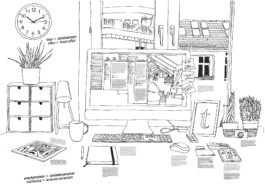
Mein Schreibtisch vs. Schreibtisch-Pool
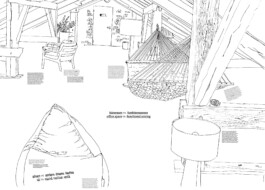
Immer mehr Firmen stellen ihre räumliche Büroorganisation auf flexible Arbeitsplätze um. Natürlich geht es dabei nicht nur um die Aktivierung der Angestellten sich agiler mit Kollegen zu vernetzen, sondern auch um die Reduzierung der Bürofläche und somit Einsparung von Kosten. Da es immer mehr Mitarbeiterinnen und Mitarbeiter gibt, die nicht jeden Tag im Büro sind, muss das Büro auch nicht mehr so groß sein, dass alle darin Platz finden. Die meisten Arbeitgeber folgen also lediglich der flexiblen Ausgestaltung der Büroräume, um in (wirtschaftlich) sicheren Zeiten ein freieres Verständnis von miteinander Arbeiten, von Abwechslung und Flexibilität zu fördern (und zu fordern). Dabei hat auch ein fixer Arbeitsplatz nach wie vor Vorteile: In unsicheren Zeiten ist ein sicherer physischer Arbeitsplatz im bewährten Umfeld von bekannten Gesichtern eine Insel der Gewissheit, die mit der Möglichkeit einer gewissen Personalisierung einhergeht (es entstehen sog. „Schreibtischbiotope“). Gleichzeitig zeigt sich im Drang nach Flexibilisierung immer häufiger die soziale Fallhöhe des Arbeitsumfelds. Desk-Sharing im Großraumbüro führt eher zu Ablenkung, Misstrauen und abnehmender Kooperationsbereitschaft unter Kolleginnen und Kollegen. Smart ist dagegen eine gute Mischung aus eigenen Arbeitsplätzen und offenen Arrangements, die unterschiedlich genutzt und verwendet werden können. Und solange sich noch die Hierarchie in der Büroorganisation widerspiegelt, wird die Akzeptanz für zusätzliche Flexibilität nicht besonders hoch sein. Nur wenn die Chefs flexibel arbeiten, machen das auch die Angestellten. Und umgekehrt.
[:en]My Desk vs. Hot-Desking
An ever-increasing number of companies are converting their physical office organisation to flexible workplaces. Of course, this not only involves motivating employees to network more flexibly with their co-workers, but also cutting office space and, with it, costs. Since more and more employees are absent from the office each day, the office no longer needs to be as large to accommodate everyone. Most employers therefore simply pursue a flexible office design in order to promote (and demand) a freer understanding of co-working, variety, and flexibility in (economically) stable times. A fixed workplace continues to have advantages: in uncertain times, a secure physical workplace in a trusted environment of familiar faces provides an island of certainty that goes hand in hand with the possibility of a kind of personalisation (so-called "desk biotopes" emerge). At the same time, the urge for flexibility increasingly reveals the social instabilities in the working environment. Desk-sharing in open-plan offices tends to lead to distraction, mistrust, and a decreasing willingness to cooperate among colleagues. Smart, by contrast, is a good mixture of in-house workplaces and open arrangements that can be used in different ways. And as long as the hierarchy is still reflected in the office organisation, the acceptance of additional flexibility will not be particularly high. It is only when bosses work flexibly that employees do the same. And vice versa.
[:]Wegeleitsystem vs. Navigationssystem
Heute nutzen ca. 70% eine Navigationsapp des Smartphones zur Orientierung in der Stadt. Ohne GoogleMaps, Apple Maps oder Waze ist ein Leben im Alltag zwar noch möglich, für viele aber anscheinend schon (fast) undenkbar geworden. Immer häufiger können Navigationsapps schon in Gebäuden wie Flughäfen, Fußballstadien oder Einkaufszentren helfen, wo sich sonst schnell Orientierungslosigkeit einstellt. Wird die Navigation per Smartphone in Zukunft auch in Büros Einzug halten? Bisher herrschen hier noch klassische, statische Wegeleitsysteme vor. Zwar können Räume online reserviert werden, aber ein Konferenzraum bleibt Konferenzraum, der buchbar oder nicht-buchbar ist. Eine Nutzungsänderung des Raums an sich ist dabei nicht vorgesehen. Da Büros inzwischen aber zu einer Ansammlung von temporären Spezialräumen und -zonen geworden sind, ist eine transparente, tageszeitabhängige Zuordnung von Raumnutzungen unabdingbar. Smart ist eine In-House Navigation, wenn sie on-the-go funktioniert. Dann wird nämlich das Verhalten der Nutzerinnen und Nutzer abgebildet: Aus der Küche wird schnell der Konferenzraum, aus der Bibliothek der Eventraum und aus der Rezeption die Bar für den After-Work-Drink. Das lässt sich per Smartphone besser regeln, als wenn man überall im Büro ständig neue Zettel mit Pfeilen klebt.
[:en]
Wayfinding vs. In-House Navigation
Approximately 70% of people today use a smartphone navigation app to get around town. Life without GoogleMaps, Apple Maps or Waze is still possible in everyday life, but for many people it is (almost) unthinkable. More and more often, navigation tips can even help in buildings like airports, football stadiums or shopping centres, where disorientation often quickly sets in. Will navigation by smartphone also enter the office world in future? So far, classic, static guidance systems still dominate here. Although it is possible to reserve rooms online, a conference room remains a conference room that can be booked or not. There are no plans to change the use of the room itself. However, since offices have now become a collection of temporary special rooms and zones, a transparent, daytime-dependent allocation of room uses is indispensable. The smart solution is an in-house navigation system if it works on-the-go. In this case, the users' behaviour is mapped: the kitchen is quickly transformed into the conference room, the library into the event room, and the reception area into the bar for an after-work drink. This can be better regulated with a smartphone than by constantly placing new stickers with arrows all over the office.
[:]
Büroraum vs. Funktionszonen
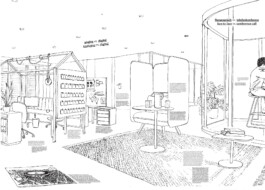
Das normale Büro ist völlig okay. Trotzdem ist es vom Aussterben bedroht. Chillout-Zone, Spiel-Areal, Telefonkabine, Konferenz-Space, Silent-Room und natürlich der Meeting-Point. Jeder Funktion einen eigenen Raum. Jedem Raum eine designierte Funktion. Die Zeit am eigenen Schreibtisch wird logischerweise immer kürzer, der Aufenthalt in den Funktionsräumen immer länger. Insgesamt aber reduziert sich die Zeit in jeder dieser Raumeinheiten. Der Büroalltag ist somit eine Summe aus unterschiedlichen Aufgaben in unterschiedlichen Räumen. So war es früher auch schon, nur waren die Funktionsräume nicht spezifisch (möbliert) und vor allem undogmatisch(er) bezeichnet. Ist der spezifische Funktionsraum also nur die eine Seite der Medaille und das Allzweckbüro die andere? Die Wahrheit liegt wie immer in der Mitte: Viel hängt von den Vorstellungen über zukünftige technische Entwicklungen ab. Für Elon Musk (TESLA und SpaceX) zum Beispiel ist die Vision klar: Mit seiner Firma Neuralink plant er die Verknüpfung des menschlichen Gehirns mit künstlicher Intelligenz. Dann braucht es nur noch eine funktionierende Schnittstelle, um effizient die Tagesaufgaben abzuarbeiten. Dies wäre dann der Inbegriff eines allumfassenden Spezialraumes. Aber ganz ehrlich, ist das dann smart? Smart ist doch vielmehr, wenn wir überall eine Schnittstelle nutzen könnten, die den Zugriff auf die benötigten Informationen und Daten jederzeit und an jedem Ort ermöglicht – egal ob beim Tischfußball oder in der Telefonkabine.
[:en]
Office Space vs. Functional Zoning
The regular office is perfectly okay. It is nonetheless threatened with extinction. Chillout zone, gaming area, telephone booth, conference space, silent room and, of course, the meeting point. Every function has its own room. Every room has a designated function. The time spent at your own desk is logically getting shorter and shorter, and the time spent in the function rooms is growing ever longer. All in all, however, the time spent in each of these room units is decreasing. Everyday office life is consequently a sum of different tasks in different rooms. This was also the case in the past, but the functional rooms were not specifically (furnished) and, above all, were not designated as such so dogmatically. So is the specific functional room just one side of the coin, and the general-purpose office the other? As always, the truth lies somewhere in the middle: much depends on people's expectations of future technical developments. For Elon Musk (TESLA and SpaceX), for example, the vision is clear: with his company Neuralink, he plans to link the human brain with artificial intelligence. Then all that is needed is a functioning interface enabling daily tasks to be performed efficiently. This would then be the embodiment of an all-encompassing special room. But to be completely honest, is that smart? Wouldn't it be truly smart if we could use an interface anywhere providing access to required information and data anytime and anywhere - no matter if it's at a round of table football or in a telephone booth?
[:]
2. WELLBEING
Sitzen vs. Stehen, Liegen, Laufen
Mit 10.000 Schritten pro Tag wird die Gesundheit des Menschen erheblich verbessert. Das ist ganz schön viel. Wer soll bei dem ganzen Gelaufe denn dann die ganze Arbeit wegschaffen? Zum Glück handelt es sich bei den 10.000 Schritten um einen Mythos aus der Werbung, die im Vorfeld der olympischen Sommerspiele in Tokio im Jahre 1964 die Hauptstadtbewohner zu mehr Bewegung, nun ja, bewegen sollte. Doch aktuelle Studien setzen die Zahl auch nur etwas niedriger an: So zwischen 6.000-8.000 Schritte bedarf der gesunde Körper am Tag. Im Durchschnitt gehen Büroangestellte übrigens nur 1.500 Schritte am Tag. Schließlich sitzen sie den halben Tag in Meetings, am Schreibtisch, beim Essen, beim Pendeln im Auto oder vor dem smarten TV zu Hause. Über 60 Millionen Fehltage gibt es allein in Deutschland wegen Rückenbeschwerden. Dabei ist Abhilfe einfach möglich: Sitzen, Stehen, Liegen, Laufen. In der Abwechslung liegt die heilende Kraft für den Rücken. Und dies ist dank sensorischer Überwachung und individueller Anforderungen immer leichter möglich. Die Smartwatch trackt unsere Schritte und liefert uns jederzeit Bericht über unser Bewegungsprofil. Leider lassen wir uns aber nur allzu ungern überwachen. Smart ist in diesem Fall, wer es trotzdem tut.
[:en]
2. WELLBEING
Sit vs. Stand, Recline, Walk
Taking 10,000 steps a day significantly improves people's health. That's rather a lot. Who's supposed to do the work with all this walking going on? Fortunately, the 10,000 steps are a myth dating from advertising which, in the run-up to the 1964 Tokyo Summer Olympics, was intended to motivate the inhabitants of the capital to get more exercise. Current studies, however, only lower the figure marginally: A healthy body needs between 6,000-8,000 steps a day. On average, office workers actually manage only 1,500 steps a day. After all, they spend half the day in meetings, at their desks, eating, commuting by car, or watching their smart TV at home. In Germany alone, over 60 million days a year are lost due to back problems. There is a simple remedy, however: sitting, standing, lying, walking. The healing power for the back lies in variety. And this is becoming progressively easier thanks to sensory monitoring and individual requirements. Smartwatches track our steps and provide us with a report on our movement profile at any time. Unfortunately, we are reluctant to be monitored. The smart person in this case is the one who does it anyway.
[:]Raumklima vs. Mikroklima
Der Klimawandel macht sich immer stärker auch im Gebäudemanagement bemerkbar. Gebäude mit immer mehr Glas und weniger Verschattung in Kombination mit einer Zunahme der Sonnen- und Hitzetage sowie der Anstieg der Durchschnittstemperatur führen zu besonderen Herausforderungen, um in Büroräumen ein arbeitsfreundliches Klima herzustellen. Stellen Sie sich nun vor, in Zukunft würde aber gar nicht mehr das Gebäude klimatechnisch versorgt werden müssen, weil sie das selbst übernehmen: Ihre eigene Klimadrohne begleitet sie ständig von Raum zu Raum, von Besprechung zu Besprechung. Auf diese Weise hätten sie immer und überall das perfekte Klima, nicht im Raum, sondern am Körper. Der Vorteil wäre, dass jeder Teilnehmer einer Besprechung immer das persönlich präferierte Klima um sich hätte und nicht, wie sonst üblich, eine bauliche Klimatisierung, die zwar auf hitzige Besprechungsatmosphären reagiert, aber nicht auf individuelle Präferenzen. Vorbei wären die Zeiten, in denen nach einer intensiven Besprechung die Luft im Raum steht, es ständig Ärger übers Lüften oder Heizen geben würde. Und da der Klimaroboter auch vor der Tür funktioniert, würden noch nicht mal mehr beim Rauchen die Finger abfrieren. Neben diesen Utopien mutet der smarte Bürostuhl schon deutlich konkreter an. Zu den üblichen ergonomischen Finessen bietet der Stuhl Ventilatoren und Heizelemente und kommuniziert über WLAN oder Bluetooth mit der zentralen Klimaanlage, um entsprechend schnell auf veränderte klimatische Anforderungen reagieren zu können. Die smarte Folge ist eine effiziente und damit kostensparende Klimatisierung und viel Spaß bei der Justierung und Steuerung der Ventilatoren zur Überbrückung einer enervierenden Sitzung.
[:en]
Central Heating vs. Microclimate
Climate change is becoming increasingly noticeable, in facility management as well. Buildings with a growing expanse of glass and less shading combined with an increase in the number of hot and sunny days, as well as a rise in average temperatures, are posing particular challenges for creating a work-friendly climate in offices. Now imagine that in the future the building would no longer have to be supplied with air-conditioning, because you would take responsibility for it yourself: Your own climate drone accompanies you constantly from room to room, from meeting to meeting. In this way, you would always enjoy the perfect climate everywhere, not in the room, but on your body. The advantage would be that every participant in a meeting would always have their personally preferred climate around them and not, as is customary, a structural air-conditioning system that may well react to a heated atmosphere in the meeting, but not to individual preferences. Gone would be the days when, after an intensive meeting, the air would hang in the room and there would be constant annoyance about the ventilation or heating. And because the climate robot would also work outdoors, even smokers would no longer freeze their fingers off. Compared to these utopias, the smart office chair already sounds far more tangible. In addition to the usual ergonomic refinements, the chair would boast fans and heating elements and communicate with the central air-conditioning system via WLAN or Bluetooth in order to be able to react quickly to changing climatic requirements. The smart result offers efficient and therefore cost-saving air conditioning, and loads of fun adjusting and regulating the fans to liven up an exhausting session.
[:]
Schallschutz vs. Kopfhörer
Wenn jemand EarPods (zum Beispiel Apples AirPods) im Büro trägt – was im Übrigen vor allem in Großraumbüros immer häufiger passiert – gibt es dafür mehrere Gründe. 1. eine Telefonkonferenz, 2. Musik- oder Podcasthören, 3. Vorgeben 1. zu tun, um in Ruhe gelassen zu werden, 4. Vergesslichkeit. Gerade der Fake-Call (3.) tritt immer häufiger auf, weil das Gewusel im Büro – permanent unter Beobachtung stehen, permanent unter Strom stehen – anstrengend und für intellektuelle Tätigkeiten unproduktiv ist. AirPods machen heute das, was jahrzehntelang die Aufgabe von Bürowänden war: eine (private) Atmosphäre der Abgeschiedenheit zu schaffen. Heute, im wandlosen Großraumbüro scheint ein Arbeitsalltag ohne schnurlose Kopfhörer für einige schon nicht mehr vorstellbar: “We moved from offices to an open plan two years ago, and wireless headphones are why I haven’t quit,” so zum Beispiel ein Angestellter einer Medienfirma in New York.
Dass die akustische Belästigung auf diese Weise in den Griff zu kriegen ist, ist das eine Ergebnis, dass die Bereitschaft zur Kollaboration, zum Face-to-Face Austausch mit dem Auftreten von Großraumbüros rapide gesunken ist, das andere. Und das ist jetzt wirklich interessant: Die Gründe für den rasanten Anstieg wurden immer mit den Anforderungen moderner Arbeitsgesellschaften verbunden: Interdisziplinarität, Kommunikation, Teamwork. Doch gerade Kollaboration und Kommunikation funktioniert(e) in Zeiten von Einzel- oder Doppelbüros besser. Im Großraumbüro kommt noch die visuelle Belastung hinzu. Googles Brille kann zwar eine zusätzliche digitale Informationsschicht auf den Büroalltag applizieren, Sichtschutz biete sie aber nicht. Vielleicht sind analoge Wände im digitalen Zeitalter manchmal doch ziemlich smart.
[:en]Acoustic Insulation vs. Sound Cloud
If someone is wearing in-ear headphones (e.g. Apple's AirPods) in the office - which, incidentally, is increasingly the case in open-plan offices - there are a number of possible reasons for it. 1. a telephone conference, 2. listening to music or podcasts, 3. pretending to do 1. in order to be left in peace, 4. forgetfulness. The fake call (3.) in particular is occurring more and more frequently because the hustle and bustle in the office - constantly under observation, permanently pumped up - is exhausting and not conducive to intellectual activity. AirPods now do what office walls have been designed to do for decades: create a (private) atmosphere of seclusion. Today, in an open-plan office without walls, some people can no longer imagine a working day without cordless headphones: "We moved from offices to an open plan two years ago, and wireless headphones are why I haven't quit," says an employee of a media company in New York, for example.
The fact that acoustic harassment can be tackled in this way is one result. The other is that the willingness to collaborate, the readiness for face-to-face exchanges has rapidly fallen with the appearance of open-plan offices. And what is really interesting: the reasons for the rapid increase have always been linked to the requirements of modern working societies: interdisciplinarity, communication, teamwork. But it is precisely collaboration and communication that work(ed) better in times of single or double offices. In an open-plan office, there is also the added problem of visual strain. Although Google Glass can apply an additional layer of digital information to everyday office life, it does not provide any privacy. Maybe, in the digital age, analogue walls are sometimes pretty smart.
[:]Pausenbrot vs. Büro-Buffet
„Essen ist was für Weicheier“, so Gordon Gekko 1987 im Hollywood-Blockbuster Wall Street. Damit prognostizierte der knallharte Banker gerade für Nordamerika erstaunlich gut einen heute immer noch gültigen Trend. Vor allem für Büroangestellte kommt das Mittagessen eher einem Fütterungsritual als einer Speisezeremonie gleich. Kein Wunder, wenn Studien zufolge zwischen 50-60% der US-amerikanischen Angestellten eher am Schreibtisch essen und vor allem allein. Die Am-Schreibtisch-Esser nehmen in der Regel zunächst einmal kleinere, wenig nahrhafte Speisen zu sich und versuchen dies, im Laufe des Tages mit Süßigkeiten oder sonstigen Snacks zu kompensieren. Die Zufriedenheit am Arbeitsplatz sinkt so dramatisch im Vergleich zu Angestellten, die mit Kolleginnen und Kollegen essen, dabei Small Talk führen und dann (in der Regel motiviert) an den Arbeitsplatz zurückkehren. Auch die Folgen für Schreibtisch und Rechner sind wohl den meisten Leserinnen und Lesern bekannt: Krümel, Spritzer und Essensreste, die mit fettigen Fingern von Tastatur und Unterlagen entfernt werden wollen. Vor diesem Hintergrund ist es ungleich smarter, dass immer mehr Büros mit hochwertigen Küchen ausgestattet werden. Manchmal versorgen sogar Köche die Angestellten mit kulinarischen Freuden für jeglichen Geschmack. Im Silicon Valley hingegen gehen die Effizienzpraktiken der Start-Up’ler inzwischen soweit, dass durch Gemüseshakes und Vitaminpräparate, die über den Tag verteilt eingenommen werden, beim Erhalt von maximaler Leistungsfähigkeit überhaupt keine Zeit mehr für das Essen „verloren“ wird. Ob das so smart ist?
[:en]Lunch Box vs. Office Restaurant
"Lunch is for wimps," says Gordon Gekko, a fictional character in the 1987 Hollywood blockbuster Wall Street. The hard-nosed banker thus made a remarkably good forecast of a trend that is still valid today, especially for North America. For office workers in particular, lunch is more like a fodder ritual than a dining ceremony. No wonder, then, that studies show between 50-60% of US employees prefer to eat at their desks and, above all, to eat alone. As a rule, desk diners begin by consuming smaller, less nutritious foods, and then attempt to compensate for this during the course of the day with sweets or other snacks. As a consequence, job satisfaction drops dramatically in comparison to employees who eat with their colleagues, engage in small talk, and then return to their job (usually motivated). Most readers will also be familiar with the consequences for desks and computers: crumbs, splashes and food leftovers that have to be removed from the keyboard and documents with greasy fingers. Considering this, it is infinitely smarter for more and more offices to be equipped with high-quality kitchens. Sometimes the employees are even provided with culinary delights to suit every taste by chefs. In Silicon Valley, by contrast, the efficiency practices of start-uppers have now progressed to the point where vegetable shakes and vitamin preparations are ingested throughout the day to maintain maximum performance without "losing" any time for eating. Is that so smart?
[:]
3. COMMUNICATION
Analog vs. Digital
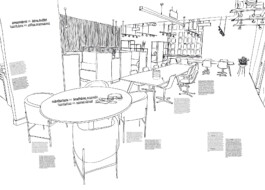
Eine Beobachtung aus einer der aktuell innovativsten Büroatmosphären, dem Design Lab von Google im Silicon Valley: lichtdurchflutete Räume mit unzähligen Stehtischen für Gespräche, Diskussionen und Präsentationen. An den Wänden und auf den Tischen liegen und hängen Designvarianten, Materialproben, Farbspektren. Workshopräume und Galerien sind mit Materialbibliotheken zum Vergleichen, Verändern, Anpassen ausgestattet. Überall Bücherwände, die sowohl Designklassiker als auch aktuelle Inspirationen bereithalten. Das Physische triumphiert hier über das Digitale. Vielleicht ist das auch kein Wunder, wenn die daraus entstehenden Produkte wie der Google Assistant einmal Millionen Eigenheime und Büros zieren sollen, sich also ständig messen müssen im Designwettkampf der Gerätschaften. Und doch ist es interessant, dass im Design Labor der wichtigsten Digitalfirma der Gegenwart, so gut wie alles erst einmal analog abzulaufen scheint. Laptops, Monitore, Handys sind kaum bis gar nicht zu sehen. Der Austausch, die Diskussion, der Kontakt mit und durch den Designer machen den Unterschied. Smart bedeutet hier, Materialität, Zugänglichkeit, Offenheit. Smart sind hier bei Google aber auch die sogenannten Human Refueling Stations: Rauminstallationen zum Rückzug und zum Meditieren, um wieder aufzuladen, den Kopf frei zu bekommen und die Gedanken zu fokussieren, unterlegt mit individualisierbaren Sound- und Lichtdesigns. Vielleicht übertrieben aber für die Nutzerinnen und Nutzer anscheinend sehr bekömmlich.
[:en]3. COMMUNICATION
Analogue vs. Digital
An observation from one of today's most innovative office atmospheres, Google's Design Lab in Silicon Valley: light-flooded rooms with countless bar tables for conversations, discussions and presentations. Hanging or lying on the walls and tables are design variations, material samples and colour spectra. Workshop rooms and galleries are equipped with material libraries for comparison, modification and customisation. Bookcases everywhere offer both design classics and current inspirations. Here, the physical triumphs over the digital. And maybe it's no wonder given that the resulting products such as Google Assistant speakers are intended to adorn millions of homes and offices, where they have to constantly participate in the competition for equipment design. It is nonetheless interesting that almost everything in the design lab of today's most important digital company seems to take place in an analogue fashion. Laptops, monitors, and mobile phones are hardly to be seen, if at all. The interaction, discussions, contact with and through the designer make the difference. Smart here means materiality, accessibility, openness. Also smart here at Google are the so-called Human Refuelling Stations: room installations for workers to retreat to and meditate in order to recharge their batteries, clear their minds, and focus their thoughts, underpinned by personalised sound and lighting designs. Maybe a bit over the top, but seemingly very pleasurable for the users.
[:]Archiv vs. Datenraum
Früher gab es Archive mit kilometerlangen Regalen, heute Serverräume. Und während die Regale irgendwann einmal voll sind, sind die Speicherkapazitäten des digitalen Zeitalters schier unendlich: Bis 2025 könnte sich das weltweite Datenvolumen noch einmal verzehnfachen, auf dann 163 Zettabyte. Das ist eine 163 mit 21 Nullen! Auch wenn wir dieser Prognose nicht blind vertrauen sollten (vielleicht eher in Richtung 22 Nullen?), wird deutlich, dass sich die Perspektive auf das Archiv grundlegend verändern wird. Wenn man das Archiv nach Foucault als das „Spiel der Regeln“ bezeichnet, so muss dieses Regelwerk durch das Aufkommen von digitalen Archiven neu definiert werden. Die digitale Verarbeitung von Daten erfordert eine neue Logik beziehungsweise ein neues Konzept des Archivs, nämlich eins, das Daten als Information aufrechterhält. Man könnte auch sagen, Daten sind nur relevant, wenn die darin verfügbare Information jederzeit auffindbar ist. Doch ein Archiv ist auch ein Ort stetiger Transformation von Wissen: sei es durch Verfall, Vergessen oder Zerstörung. Wurden bisher Archiven die drei grundlegenden Aufgaben des Ansammelns, Archivierens und Präsentierens zugeschrieben, bieten heutige Technologien und Entwicklungen die Möglichkeiten des Vernetzens, der Kollaboration und des Verteilens — und während Archive bisher eher verschlossene und Fachpublikum vorbehaltene Orte waren, könnten neue Technologien auch für deren Öffnung für die breite Öffentlichkeit sorgen. Das ideale Archiv der Zukunft bereitet Inhalte so auf, dass ein Zugriff für Nutzerinnen und Nutzer jederzeit zu jedem Zweck möglich ist. Und das ist dann smart. Das gibt es so heute leider noch recht selten.
[:en]Archive vs. Data Cloud
In the past, there were archives with shelves that were miles long; today there are server rooms. And while at some point shelves become full, the storage capacities of the digital age are almost infinite: by 2025 the worldwide volume of data could increase tenfold again, to 163 Zettabyte. That's 163 followed by 21 zeroes! Even though we maybe shouldn't trust this forecast blindly (perhaps more in the direction of 22 zeroes?), it is becoming clear that the perspective on archiving will change fundamentally. If, according to Foucault, the archive is described as the "game of rules", this set of rules needs to be redefined in light of the advent of digital archives. The digital processing of data requires a new logic, or a new concept of the archive, namely one that preserves data as information. It could also be said that data is only relevant if the information available in it can be found at any time. But an archive is also a place of constant knowledge transformation: whether through decay, oblivion or destruction. Whereas archives used to be attributed the three basic tasks of collecting, archiving and presenting, today's technologies and developments offer the possibilities of networking, collaboration and distribution - and while archives were previously rather restricted and reserved for specialist audiences, new technologies could also open them up to the general public. The ideal archive of the future prepares content in such a way that users can access it at any time and for any purpose. And then it is smart. Unfortunately, this is still somewhat rare today.
[:]
Flipchart vs. Smartboard
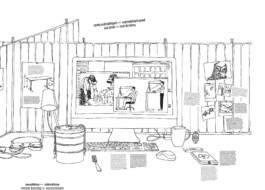
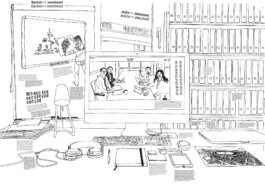
Das Flipchart ist eine Allzweckwaffe, die noch nicht mal durch das Smartboard verdrängt worden ist. Auch wenn sich gefühlt jede(r) NutzerIn schon mal die Finger beim Aufhängen der neuen Papierrolle eingeklemmt hat, ist das Ergebnis eines vollständig mit Flipchart-Blättern zugehängten Seminarraumes doch einzigartig. Allein dafür ist das Smartboard keine Alternative. Aber für andere Dinge: Keine Papierverschwendung, direkter Transfer zum Computer, Zugriff für alle Teilnehmer und ein digitales Archiv. Nahezu jedes Büro (und inzwischen auch fast jedes Schulzimmer) hat heute bereits ein Smartboard. Auch wenn so einige Boards durch Permanent-Marker verunstaltet wurden und das eine oder andere wohl auch deswegen nur in der Ecke rumsteht, sind sie aus dem Büroalltag nicht wegzudenken. Analog und digital passen heute und in Zukunft perfekt zusammen. Das bestätigen auch aktuelle Erkenntnisse der Kognitionsforschung: Wir Menschen lernen über alle Sinne. Wer sich also beim Lernen oder der Projektarbeit künstlich beschränkt, ist tendenziell benachteiligt. Smart ist also, wer nicht nur redundante Systeme hat und diese auch nutzt, je nach Kontext und Wissensstand, sondern sich nicht auf ein Medium beschränkt. Gute Ergebnisse werden dann erzielt, wenn das ganze Portfolio an Medien und Materialien zum vollen Einsatz kommt.
[:en]
Flipchart vs. Smartboard
The flipchart is an all-purpose weapon that hasn't even been replaced by the smartboard. Even though probably every user has at some time or another jammed their fingers while inserting a new roll of paper, the effect of a seminar room fully plastered with flipchart sheets is unparalleled. For this alone, the Smartboard offers no alternative. But for other things it does: no paper wastage, direct transfer to the computer, access for all participants, and a digital archive. Virtually every office (and almost every classroom in the meantime) already has a Smartboard. Even though not a few of them have been defaced by permanent markers, and one or the other is probably just standing around in a corner for this reason, they are an indispensable part of everyday office life. Analogue and digital complement each other perfectly today and in the future. This is also confirmed by current findings in cognitive research: we humans learn via all our senses. Those who artificially limit themselves when learning or working on projects tend to be at a disadvantage. Smart in this context then is anyone who not only has redundant systems and uses them, depending on the context and level of knowledge, but who also doesn't limit themselves to one medium. The best results are achieved when the entire portfolio of media and materials is used to the full.
[:]Flurgespräch vs. Telefonkonferenz
Mit den Pixar Headquarters entwickelte Steve Jobs den Prototypen eines Büros, das sich in seiner räumlichen Ausgestaltung vor allem an der Förderung von Möglichkeiten der zufälligen Begegnung orientierte. Bis heute gilt Pixar als eine der kreativsten Firmen, deren Erfolg zu einem wesentlichen Teil der Architektur zugeschrieben werden kann. Auch Steve Jobs’ Vermächtnis – das vor rund 1,5 Jahren eröffnete Apple Hauptquartier – hat diesen Ansatz als Leitmotiv verinnerlicht. Der Infinite Loop (Endlosschleife), mit einem 12 Hektar großen Park im Inneren des Loops, kann als eine Wandelhalle gelesen werden, um spontane Begegnungen und gemeinsame Fußwege zu ermöglichen. Der positive Effekt dieser zufallsgesteuerten Kommunikation wird mittlerweile auch durch wissenschaftliche Erkenntnisse gestützt. Wo finden heute entscheidende Durchbrüche, wichtige Ideen oder Innovationen statt? Nicht am Mikroskop oder vorm Computer, sondern am Konferenztisch, am Getränkeautomaten und im Flurgespräch. Direkte Kommunikation und Austausch über Projekte entstehen also über spezifische räumliche Settings, die zufällige Begegnungen ermöglichen. Neben Kommunikationsräumen brauchen Mitarbeiterinnen und Mitarbeiter aber auch Freizeit, die zum Austausch zur Verfügung steht. Wenn immer mehr Meetings anberaumt werden, unterstützt das ein spontanes Zusammentreffen eher nicht. Smart ist also, wenn alle Mitarbeiterinnen und Mitarbeiter die räumlichen und zeitlichen Möglichkeiten eingeräumt bekommen, sich in unvorhersehbaren Räumen zu ebensolchen Zeiten treffen zu können.
[:en]Face to Face vs. Conference Call
With Pixar's headquarters, Steve Jobs developed the prototype of an office with a spatial design that was primarily oriented towards promoting opportunities for chance encounters. To this day, Pixar is regarded as one of the most creative companies, whose success can to a large extent be attributed to architecture. Steve Jobs' legacy - the Apple headquarters that opened about one and a half years ago - also embraced this approach as a guiding principle. The Infinite Loop, with a 12-hectare park inside the loop, can be understood as a lobby that encourages spontaneous encounters and shared walkways. The positive effect of this random communication is now also supported by scientific findings. Where do decisive breakthroughs, important ideas or innovations take place today? Not at the microscope or in front of a computer, but at the conference table, at the vending machine, and in the corridor. Direct communication and exchanges about projects therefore arise through specific spatial settings that facilitate random encounters. In addition to communication rooms, employees also need free time, which is made available for interaction. When more and more meetings are scheduled, this is unlikely to encourage impromptu encounters. So smart is when all employees are given the space and time to meet by chance in unpredictable places and at unpredictable times.
[:]
Titel Das Smarte Büro
Herausgeber Messe Frankfurt Exhibition GmbH
Paperworld, Ludwig-Erhard-Anlage 1, 60327 Frankfurt am Main
Konzept MATTER Schmidt Fach Architekten und Stadtplaner PartGmbB
Gestaltung Julia Neller
Redaktion/Text Ludwig Engel, Stefan Carsten, Joris Fach, André Schmidt
Übersetzung Alan Connor, alcon-translate
Druck Messe Frankfurt Medien und Service GmbH
Copyright Messe Frankfurt Exhibition GmbH 2019
[:en]Title Das Smarte Büro
Publisher Messe Frankfurt Exhibition GmbH
Paperworld, Ludwig-Erhard-Anlage 1, 60327 Frankfurt am Main
Concept MATTER Schmidt Fach Architekten und Stadtplaner PartGmbB
Design Julia Neller
Editorial/Text Ludwig Engel, Stefan Carsten, Joris Fach, André Schmidt
Translation Alan Connor, alcon-translate
Print Messe Frankfurt Medien und Service GmbH
Copyright Messe Frankfurt Exhibition GmbH 2019
[:]Smart Solutions
„Smart Solutions“ sind möglichst intelligente Lösungen praktischer Probleme. Auf der Sonderschau der Paperworld 2020 wird das Thema „Smart Solutions“ durch altbekannte Arbeitsmittel, sowie informationstechnologische Werkzeuge neu beleuchtet. Es werden analoge und digitale Lösungen präsentiert. Altes wird nicht einfach durch Neues ersetzt, sondern beides als Instrument und Grundlage einer immer vielfältiger werdenden Arbeitswelt diskutiert.
Wer heute in Bezug auf den Büroalltag von “Smart Solutions” spricht, meint allerdings meistens zunächst einmal die digitalen Werkzeuge des Informationszeitalters. Und in der Tat: wir habe unsere Arbeitsprozesse ein ganzes Stück weit in die virtuelle Welt der Computer und Datenwolken verlegt. Prozesse wurden entmaterialisiert und damit auch zu einem gewissen Grade unsichtbar.
Als Reaktion darauf zeichnet sich ein verstärktes Bewusstsein für die Komplexität unseres Berufsalltags ab, sowie der Wusch, sich bei aller Informationsflut auf das Wesentliche konzentrieren zu können. Hier können digitale Lösungen hilfreich, aber eben auch hinderlich sein. Ein praktisches Beispiel: Verschiedene Dateiformate zu bündeln erweist sich zuweilen als sehr umständlich, wohingegen die Büroklammer sinnbildlich für eine analoge „smart solution“ steht. Lose Informationsträger verschiedenster Quellen können problemlos zusammengefasst, der sekundäre Informationsgehalt – dicke des Stapels, Qualität des Papiers, Dokumentformate – auf einen Blick erfasst, die Reihenfolge des Bündels mit wenigen Handgriffen verändert oder erweitert werden. Das schafft Übersicht und ist smart.
Dieser direkte, taktile Umgang mit Information hat natürlich enge Grenzen, ist nicht skalierbar und für big data schon gar nicht zu gebrauchen. Dafür gibt es dann wieder andere smart solutions. Die Sonderschau kommentiert Neuerungen in beiden Bereichen, smarte analoge Werkzeuge, smarte digitale Lösungen, und solche, die zwischen beiden Welten vermitteln.
[:en]Smart Solutions
When it comes to tomorrow's world of work, digital transformation is the key term. Completely new forms of office work have already emerged through networking, interaction, and automation, such as remote work or co-working spaces. How will this evolve in future and what does this mean for the world of paper, office supplies and stationery products? These and other questions will be answered by experts at the "Future Office". The 2020 innovation area is dedicated to the topic of "Smart Solutions".
It covers more than just digital tools. Beyond that, employees strongly appreciate the "well-being factor". All this needs to be combined in a modern office to ensure an attractive workplace in the age of New Work.
The innovation area shows how analogue and digital elements can be combined and challenges solved in a smart way. A series of lectures, product presentations and best-practice examples will transport the future of the office world to the real stage in Frankfurt.
For architects, planners, facility managers and dealers of office products in particular, the innovation area offers practical input and the opportunity to exchange ideas with experts.
[:]
1. SPACE
Büro vs. Heimarbeit
Als die Technologisierung und Digitalisierung ökonomischer Prozesse in den 1980er Jahren langsam Fahrt aufnahm, wurden bestehende räumliche Konzentrationen sofort in Frage gestellt: Leben wir unter diesen neuen Bedingungen zukünftig noch in der Stadt? Brauchen wir noch Orte der Arbeit? Findet – dank Informations- und Kommunikationstechnologie – in Zukunft nicht alles überall gleichzeitig statt? Heute wissen wir, dass sich diese Visionen nicht unbedingt ins Gegenteil verkehrt hat, sich jedoch gänzlich anders entwickelte, als gedacht. Ja, wir arbeiten zu Hause. Und trotzdem arbeiten wir auch im Büro. Und wenn wir abends nach Hause kommen, arbeiten wir einfach weiter. Arbeitsorte grenzen sich immer weniger voneinander ab. Der Übergang von einem zum anderen ist fließend. Während das Büro die Basis ist, die ein optimales Arbeitsumfeld bietet, um die Abläufe und die Kommunikation des Alltags bestmöglich zu spiegeln, könnte man das Home Office als das unterstützende Büro beschreiben, das sowohl Entlastung als auch Erweiterung bietet. Hinzu kommen noch die Orte und Räume, die die notwendigen Verbindungen beider Büros darstellen. Das Auto. Das Café. Der Park. So viele Telefonkonferenzen finden schon heute hier statt, obwohl die Bedingungen alles andere als optimal sind.
Smart ist, zukünftig die Verbindung all dieser Orte als Abbild der gelebten Arbeitsräume zu begreifen, die unterschiedliche Anforderungen an die Büronutzerinnen und -nutzer stellen und einfordern.
[:en]1. SPACE
Office vs. Home Office
As the technologisation and digitalisation of economic processes slowly took off in the 1980s, existing spatial concentrations were immediately called into question: Will we continue to live in the city under these new conditions in the future? Do we still need places of work? Thanks to information and communication technology, won't everything take place simultaneously everywhere in the future? Today we know that these visions have not necessarily been reversed, but have developed completely differently to how we imagined. Yes, we work at home. Yet we also work in the office. And when we come home in the evening, we simply continue to work. Places of work are becoming less and less separate from each other. The transition from one to the other is fluid. While the office is the base that provides an optimal working environment to best reflect the processes and communication of everyday life, the home office might be described as the supporting bureau that offers both relief and an extension. On top of this, there are the locations and rooms that represent the necessary connections between both offices. The car. The café. The park. Numerous telephone conferences already take place here today, although the conditions are anything but optimal.
So what's smart for the future is to view the connection of all these places as a representation of the lived workspaces that make and call for different demands on the office users.
[:]Mein Schreibtisch vs. Schreibtisch-Pool
Immer mehr Firmen stellen ihre räumliche Büroorganisation auf flexible Arbeitsplätze um. Natürlich geht es dabei nicht nur um die Aktivierung der Angestellten sich agiler mit Kollegen zu vernetzen, sondern auch um die Reduzierung der Bürofläche und somit Einsparung von Kosten. Da es immer mehr Mitarbeiterinnen und Mitarbeiter gibt, die nicht jeden Tag im Büro sind, muss das Büro auch nicht mehr so groß sein, dass alle darin Platz finden. Die meisten Arbeitgeber folgen also lediglich der flexiblen Ausgestaltung der Büroräume, um in (wirtschaftlich) sicheren Zeiten ein freieres Verständnis von miteinander Arbeiten, von Abwechslung und Flexibilität zu fördern (und zu fordern). Dabei hat auch ein fixer Arbeitsplatz nach wie vor Vorteile: In unsicheren Zeiten ist ein sicherer physischer Arbeitsplatz im bewährten Umfeld von bekannten Gesichtern eine Insel der Gewissheit, die mit der Möglichkeit einer gewissen Personalisierung einhergeht (es entstehen sog. „Schreibtischbiotope“). Gleichzeitig zeigt sich im Drang nach Flexibilisierung immer häufiger die soziale Fallhöhe des Arbeitsumfelds. Desk-Sharing im Großraumbüro führt eher zu Ablenkung, Misstrauen und abnehmender Kooperationsbereitschaft unter Kolleginnen und Kollegen. Smart ist dagegen eine gute Mischung aus eigenen Arbeitsplätzen und offenen Arrangements, die unterschiedlich genutzt und verwendet werden können. Und solange sich noch die Hierarchie in der Büroorganisation widerspiegelt, wird die Akzeptanz für zusätzliche Flexibilität nicht besonders hoch sein. Nur wenn die Chefs flexibel arbeiten, machen das auch die Angestellten. Und umgekehrt.
Wegeleitsystem vs. Navigationssystem
Heute nutzen ca. 70% eine Navigationsapp des Smartphones zur Orientierung in der Stadt. Ohne GoogleMaps, Apple Maps oder Waze ist ein Leben im Alltag zwar noch möglich, für viele aber anscheinend schon (fast) undenkbar geworden. Immer häufiger können Navigationsapps schon in Gebäuden wie Flughäfen, Fußballstadien oder Einkaufszentren helfen, wo sich sonst schnell Orientierungslosigkeit einstellt. Wird die Navigation per Smartphone in Zukunft auch in Büros Einzug halten? Bisher herrschen hier noch klassische, statische Wegeleitsysteme vor. Zwar können Räume online reserviert werden, aber ein Konferenzraum bleibt Konferenzraum, der buchbar oder nicht-buchbar ist. Eine Nutzungsänderung des Raums an sich ist dabei nicht vorgesehen. Da Büros inzwischen aber zu einer Ansammlung von temporären Spezialräumen und -zonen geworden sind, ist eine transparente, tageszeitabhängige Zuordnung von Raumnutzungen unabdingbar. Smart ist eine In-House Navigation, wenn sie on-the-go funktioniert. Dann wird nämlich das Verhalten der Nutzerinnen und Nutzer abgebildet: Aus der Küche wird schnell der Konferenzraum, aus der Bibliothek der Eventraum und aus der Rezeption die Bar für den After-Work-Drink. Das lässt sich per Smartphone besser regeln, als wenn man überall im Büro ständig neue Zettel mit Pfeilen klebt.
Büroraum vs. Funktionszonen
Das normale Büro ist völlig okay. Trotzdem ist es vom Aussterben bedroht. Chillout-Zone, Spiel-Areal, Telefonkabine, Konferenz-Space, Silent-Room und natürlich der Meeting-Point. Jeder Funktion einen eigenen Raum. Jedem Raum eine designierte Funktion. Die Zeit am eigenen Schreibtisch wird logischerweise immer kürzer, der Aufenthalt in den Funktionsräumen immer länger. Insgesamt aber reduziert sich die Zeit in jeder dieser Raumeinheiten. Der Büroalltag ist somit eine Summe aus unterschiedlichen Aufgaben in unterschiedlichen Räumen. So war es früher auch schon, nur waren die Funktionsräume nicht spezifisch (möbliert) und vor allem undogmatisch(er) bezeichnet. Ist der spezifische Funktionsraum also nur die eine Seite der Medaille und das Allzweckbüro die andere? Die Wahrheit liegt wie immer in der Mitte: Viel hängt von den Vorstellungen über zukünftige technische Entwicklungen ab. Für Elon Musk (TESLA und SpaceX) zum Beispiel ist die Vision klar: Mit seiner Firma Neuralink plant er die Verknüpfung des menschlichen Gehirns mit künstlicher Intelligenz. Dann braucht es nur noch eine funktionierende Schnittstelle, um effizient die Tagesaufgaben abzuarbeiten. Dies wäre dann der Inbegriff eines allumfassenden Spezialraumes. Aber ganz ehrlich, ist das dann smart? Smart ist doch vielmehr, wenn wir überall eine Schnittstelle nutzen könnten, die den Zugriff auf die benötigten Informationen und Daten jederzeit und an jedem Ort ermöglicht – egal ob beim Tischfußball oder in der Telefonkabine.
[:en]
My Desk vs. Hot-Desking
An ever-increasing number of companies are converting their physical office organisation to flexible workplaces. Of course, this not only involves motivating employees to network more flexibly with their co-workers, but also cutting office space and, with it, costs. Since more and more employees are absent from the office each day, the office no longer needs to be as large to accommodate everyone. Most employers therefore simply pursue a flexible office design in order to promote (and demand) a freer understanding of co-working, variety, and flexibility in (economically) stable times. A fixed workplace continues to have advantages: in uncertain times, a secure physical workplace in a trusted environment of familiar faces provides an island of certainty that goes hand in hand with the possibility of a kind of personalisation (so-called "desk biotopes" emerge). At the same time, the urge for flexibility increasingly reveals the social instabilities in the working environment. Desk-sharing in open-plan offices tends to lead to distraction, mistrust, and a decreasing willingness to cooperate among colleagues. Smart, by contrast, is a good mixture of in-house workplaces and open arrangements that can be used in different ways. And as long as the hierarchy is still reflected in the office organisation, the acceptance of additional flexibility will not be particularly high. It is only when bosses work flexibly that employees do the same. And vice versa.
Wayfinding vs. In-House Navigation
Approximately 70% of people today use a smartphone navigation app to get around town. Life without GoogleMaps, Apple Maps or Waze is still possible in everyday life, but for many people it is (almost) unthinkable. More and more often, navigation tips can even help in buildings like airports, football stadiums or shopping centres, where disorientation often quickly sets in. Will navigation by smartphone also enter the office world in future? So far, classic, static guidance systems still dominate here. Although it is possible to reserve rooms online, a conference room remains a conference room that can be booked or not. There are no plans to change the use of the room itself. However, since offices have now become a collection of temporary special rooms and zones, a transparent, daytime-dependent allocation of room uses is indispensable. The smart solution is an in-house navigation system if it works on-the-go. In this case, the users' behaviour is mapped: the kitchen is quickly transformed into the conference room, the library into the event room, and the reception area into the bar for an after-work drink. This can be better regulated with a smartphone than by constantly placing new stickers with arrows all over the office.
Office Space vs. Functional Zoning
The regular office is perfectly okay. It is nonetheless threatened with extinction. Chillout zone, gaming area, telephone booth, conference space, silent room and, of course, the meeting point. Every function has its own room. Every room has a designated function. The time spent at your own desk is logically getting shorter and shorter, and the time spent in the function rooms is growing ever longer. All in all, however, the time spent in each of these room units is decreasing. Everyday office life is consequently a sum of different tasks in different rooms. This was also the case in the past, but the functional rooms were not specifically (furnished) and, above all, were not designated as such so dogmatically. So is the specific functional room just one side of the coin, and the general-purpose office the other? As always, the truth lies somewhere in the middle: much depends on people's expectations of future technical developments. For Elon Musk (TESLA and SpaceX), for example, the vision is clear: with his company Neuralink, he plans to link the human brain with artificial intelligence. Then all that is needed is a functioning interface enabling daily tasks to be performed efficiently. This would then be the embodiment of an all-encompassing special room. But to be completely honest, is that smart? Wouldn't it be truly smart if we could use an interface anywhere providing access to required information and data anytime and anywhere - no matter if it's at a round of table football or in a telephone booth?
[:]2. WELLBEING
Sitzen vs. Stehen, Liegen, Laufen
Mit 10.000 Schritten pro Tag wird die Gesundheit des Menschen erheblich verbessert. Das ist ganz schön viel. Wer soll bei dem ganzen Gelaufe denn dann die ganze Arbeit wegschaffen? Zum Glück handelt es sich bei den 10.000 Schritten um einen Mythos aus der Werbung, die im Vorfeld der olympischen Sommerspiele in Tokio im Jahre 1964 die Hauptstadtbewohner zu mehr Bewegung, nun ja, bewegen sollte. Doch aktuelle Studien setzen die Zahl auch nur etwas niedriger an: So zwischen 6.000-8.000 Schritte bedarf der gesunde Körper am Tag. Im Durchschnitt gehen Büroangestellte übrigens nur 1.500 Schritte am Tag. Schließlich sitzen sie den halben Tag in Meetings, am Schreibtisch, beim Essen, beim Pendeln im Auto oder vor dem smarten TV zu Hause. Über 60 Millionen Fehltage gibt es allein in Deutschland wegen Rückenbeschwerden. Dabei ist Abhilfe einfach möglich: Sitzen, Stehen, Liegen, Laufen. In der Abwechslung liegt die heilende Kraft für den Rücken. Und dies ist dank sensorischer Überwachung und individueller Anforderungen immer leichter möglich. Die Smartwatch trackt unsere Schritte und liefert uns jederzeit Bericht über unser Bewegungsprofil. Leider lassen wir uns aber nur allzu ungern überwachen. Smart ist in diesem Fall, wer es trotzdem tut.
Raumklima vs. Mikroklima
Der Klimawandel macht sich immer stärker auch im Gebäudemanagement bemerkbar. Gebäude mit immer mehr Glas und weniger Verschattung in Kombination mit einer Zunahme der Sonnen- und Hitzetage sowie der Anstieg der Durchschnittstemperatur führen zu besonderen Herausforderungen, um in Büroräumen ein arbeitsfreundliches Klima herzustellen. Stellen Sie sich nun vor, in Zukunft würde aber gar nicht mehr das Gebäude klimatechnisch versorgt werden müssen, weil sie das selbst übernehmen: Ihre eigene Klimadrohne begleitet sie ständig von Raum zu Raum, von Besprechung zu Besprechung. Auf diese Weise hätten sie immer und überall das perfekte Klima, nicht im Raum, sondern am Körper. Der Vorteil wäre, dass jeder Teilnehmer einer Besprechung immer das persönlich präferierte Klima um sich hätte und nicht, wie sonst üblich, eine bauliche Klimatisierung, die zwar auf hitzige Besprechungsatmosphären reagiert, aber nicht auf individuelle Präferenzen. Vorbei wären die Zeiten, in denen nach einer intensiven Besprechung die Luft im Raum steht, es ständig Ärger übers Lüften oder Heizen geben würde. Und da der Klimaroboter auch vor der Tür funktioniert, würden noch nicht mal mehr beim Rauchen die Finger abfrieren. Neben diesen Utopien mutet der smarte Bürostuhl schon deutlich konkreter an. Zu den üblichen ergonomischen Finessen bietet der Stuhl Ventilatoren und Heizelemente und kommuniziert über WLAN oder Bluetooth mit der zentralen Klimaanlage, um entsprechend schnell auf veränderte klimatische Anforderungen reagieren zu können. Die smarte Folge ist eine effiziente und damit kostensparende Klimatisierung und viel Spaß bei der Justierung und Steuerung der Ventilatoren zur Überbrückung einer enervierenden Sitzung.
[:en]2. WELLBEING
Sit vs. Stand, Recline, Walk
Taking 10,000 steps a day significantly improves people's health. That's rather a lot. Who's supposed to do the work with all this walking going on? Fortunately, the 10,000 steps are a myth dating from advertising which, in the run-up to the 1964 Tokyo Summer Olympics, was intended to motivate the inhabitants of the capital to get more exercise. Current studies, however, only lower the figure marginally: A healthy body needs between 6,000-8,000 steps a day. On average, office workers actually manage only 1,500 steps a day. After all, they spend half the day in meetings, at their desks, eating, commuting by car, or watching their smart TV at home. In Germany alone, over 60 million days a year are lost due to back problems. There is a simple remedy, however: sitting, standing, lying, walking. The healing power for the back lies in variety. And this is becoming progressively easier thanks to sensory monitoring and individual requirements. Smartwatches track our steps and provide us with a report on our movement profile at any time. Unfortunately, we are reluctant to be monitored. The smart person in this case is the one who does it anyway.
Central Heating vs. Microclimate
Climate change is becoming increasingly noticeable, in facility management as well. Buildings with a growing expanse of glass and less shading combined with an increase in the number of hot and sunny days, as well as a rise in average temperatures, are posing particular challenges for creating a work-friendly climate in offices. Now imagine that in the future the building would no longer have to be supplied with air-conditioning, because you would take responsibility for it yourself: Your own climate drone accompanies you constantly from room to room, from meeting to meeting. In this way, you would always enjoy the perfect climate everywhere, not in the room, but on your body. The advantage would be that every participant in a meeting would always have their personally preferred climate around them and not, as is customary, a structural air-conditioning system that may well react to a heated atmosphere in the meeting, but not to individual preferences. Gone would be the days when, after an intensive meeting, the air would hang in the room and there would be constant annoyance about the ventilation or heating. And because the climate robot would also work outdoors, even smokers would no longer freeze their fingers off. Compared to these utopias, the smart office chair already sounds far more tangible. In addition to the usual ergonomic refinements, the chair would boast fans and heating elements and communicate with the central air-conditioning system via WLAN or Bluetooth in order to be able to react quickly to changing climatic requirements. The smart result offers efficient and therefore cost-saving air conditioning, and loads of fun adjusting and regulating the fans to liven up an exhausting session.
[:]Schallschutz vs. Kopfhörer
Wenn jemand EarPods (zum Beispiel Apples AirPods) im Büro trägt – was im Übrigen vor allem in Großraumbüros immer häufiger passiert – gibt es dafür mehrere Gründe. 1. eine Telefonkonferenz, 2. Musik- oder Podcasthören, 3. Vorgeben 1. zu tun, um in Ruhe gelassen zu werden, 4. Vergesslichkeit. Gerade der Fake-Call (3.) tritt immer häufiger auf, weil das Gewusel im Büro – permanent unter Beobachtung stehen, permanent unter Strom stehen – anstrengend und für intellektuelle Tätigkeiten unproduktiv ist. AirPods machen heute das, was jahrzehntelang die Aufgabe von Bürowänden war: eine (private) Atmosphäre der Abgeschiedenheit zu schaffen. Heute, im wandlosen Großraumbüro scheint ein Arbeitsalltag ohne schnurlose Kopfhörer für einige schon nicht mehr vorstellbar: “We moved from offices to an open plan two years ago, and wireless headphones are why I haven’t quit,” so zum Beispiel ein Angestellter einer Medienfirma in New York.
Dass die akustische Belästigung auf diese Weise in den Griff zu kriegen ist, ist das eine Ergebnis, dass die Bereitschaft zur Kollaboration, zum Face-to-Face Austausch mit dem Auftreten von Großraumbüros rapide gesunken ist, das andere. Und das ist jetzt wirklich interessant: Die Gründe für den rasanten Anstieg wurden immer mit den Anforderungen moderner Arbeitsgesellschaften verbunden: Interdisziplinarität, Kommunikation, Teamwork. Doch gerade Kollaboration und Kommunikation funktioniert(e) in Zeiten von Einzel- oder Doppelbüros besser. Im Großraumbüro kommt noch die visuelle Belastung hinzu. Googles Brille kann zwar eine zusätzliche digitale Informationsschicht auf den Büroalltag applizieren, Sichtschutz biete sie aber nicht. Vielleicht sind analoge Wände im digitalen Zeitalter manchmal doch ziemlich smart.
Pausenbrot vs. Büro-Buffet
„Essen ist was für Weicheier“, so Gordon Gekko 1987 im Hollywood-Blockbuster Wall Street. Damit prognostizierte der knallharte Banker gerade für Nordamerika erstaunlich gut einen heute immer noch gültigen Trend. Vor allem für Büroangestellte kommt das Mittagessen eher einem Fütterungsritual als einer Speisezeremonie gleich. Kein Wunder, wenn Studien zufolge zwischen 50-60% der US-amerikanischen Angestellten eher am Schreibtisch essen und vor allem allein. Die Am-Schreibtisch-Esser nehmen in der Regel zunächst einmal kleinere, wenig nahrhafte Speisen zu sich und versuchen dies, im Laufe des Tages mit Süßigkeiten oder sonstigen Snacks zu kompensieren. Die Zufriedenheit am Arbeitsplatz sinkt so dramatisch im Vergleich zu Angestellten, die mit Kolleginnen und Kollegen essen, dabei Small Talk führen und dann (in der Regel motiviert) an den Arbeitsplatz zurückkehren. Auch die Folgen für Schreibtisch und Rechner sind wohl den meisten Leserinnen und Lesern bekannt: Krümel, Spritzer und Essensreste, die mit fettigen Fingern von Tastatur und Unterlagen entfernt werden wollen. Vor diesem Hintergrund ist es ungleich smarter, dass immer mehr Büros mit hochwertigen Küchen ausgestattet werden. Manchmal versorgen sogar Köche die Angestellten mit kulinarischen Freuden für jeglichen Geschmack. Im Silicon Valley hingegen gehen die Effizienzpraktiken der Start-Up’ler inzwischen soweit, dass durch Gemüseshakes und Vitaminpräparate, die über den Tag verteilt eingenommen werden, beim Erhalt von maximaler Leistungsfähigkeit überhaupt keine Zeit mehr für das Essen „verloren“ wird. Ob das so smart ist?
[:en]Acoustic Insulation vs. Sound Cloud
If someone is wearing in-ear headphones (e.g. Apple's AirPods) in the office - which, incidentally, is increasingly the case in open-plan offices - there are a number of possible reasons for it. 1. a telephone conference, 2. listening to music or podcasts, 3. pretending to do 1. in order to be left in peace, 4. forgetfulness. The fake call (3.) in particular is occurring more and more frequently because the hustle and bustle in the office - constantly under observation, permanently pumped up - is exhausting and not conducive to intellectual activity. AirPods now do what office walls have been designed to do for decades: create a (private) atmosphere of seclusion. Today, in an open-plan office without walls, some people can no longer imagine a working day without cordless headphones: "We moved from offices to an open plan two years ago, and wireless headphones are why I haven't quit," says an employee of a media company in New York, for example.
The fact that acoustic harassment can be tackled in this way is one result. The other is that the willingness to collaborate, the readiness for face-to-face exchanges has rapidly fallen with the appearance of open-plan offices. And what is really interesting: the reasons for the rapid increase have always been linked to the requirements of modern working societies: interdisciplinarity, communication, teamwork. But it is precisely collaboration and communication that work(ed) better in times of single or double offices. In an open-plan office, there is also the added problem of visual strain. Although Google Glass can apply an additional layer of digital information to everyday office life, it does not provide any privacy. Maybe, in the digital age, analogue walls are sometimes pretty smart.
Lunch Box vs. Office Restaurant
"Lunch is for wimps," says Gordon Gekko, a fictional character in the 1987 Hollywood blockbuster Wall Street. The hard-nosed banker thus made a remarkably good forecast of a trend that is still valid today, especially for North America. For office workers in particular, lunch is more like a fodder ritual than a dining ceremony. No wonder, then, that studies show between 50-60% of US employees prefer to eat at their desks and, above all, to eat alone. As a rule, desk diners begin by consuming smaller, less nutritious foods, and then attempt to compensate for this during the course of the day with sweets or other snacks. As a consequence, job satisfaction drops dramatically in comparison to employees who eat with their colleagues, engage in small talk, and then return to their job (usually motivated). Most readers will also be familiar with the consequences for desks and computers: crumbs, splashes and food leftovers that have to be removed from the keyboard and documents with greasy fingers. Considering this, it is infinitely smarter for more and more offices to be equipped with high-quality kitchens. Sometimes the employees are even provided with culinary delights to suit every taste by chefs. In Silicon Valley, by contrast, the efficiency practices of start-uppers have now progressed to the point where vegetable shakes and vitamin preparations are ingested throughout the day to maintain maximum performance without "losing" any time for eating. Is that so smart?
[:]3. COMMUNICATION
Analog vs. Digital
Eine Beobachtung aus einer der aktuell innovativsten Büroatmosphären, dem Design Lab von Google im Silicon Valley: lichtdurchflutete Räume mit unzähligen Stehtischen für Gespräche, Diskussionen und Präsentationen. An den Wänden und auf den Tischen liegen und hängen Designvarianten, Materialproben, Farbspektren. Workshopräume und Galerien sind mit Materialbibliotheken zum Vergleichen, Verändern, Anpassen ausgestattet. Überall Bücherwände, die sowohl Designklassiker als auch aktuelle Inspirationen bereithalten. Das Physische triumphiert hier über das Digitale. Vielleicht ist das auch kein Wunder, wenn die daraus entstehenden Produkte wie der Google Assistant einmal Millionen Eigenheime und Büros zieren sollen, sich also ständig messen müssen im Designwettkampf der Gerätschaften. Und doch ist es interessant, dass im Design Labor der wichtigsten Digitalfirma der Gegenwart, so gut wie alles erst einmal analog abzulaufen scheint. Laptops, Monitore, Handys sind kaum bis gar nicht zu sehen. Der Austausch, die Diskussion, der Kontakt mit und durch den Designer machen den Unterschied. Smart bedeutet hier, Materialität, Zugänglichkeit, Offenheit. Smart sind hier bei Google aber auch die sogenannten Human Refueling Stations: Rauminstallationen zum Rückzug und zum Meditieren, um wieder aufzuladen, den Kopf frei zu bekommen und die Gedanken zu fokussieren, unterlegt mit individualisierbaren Sound- und Lichtdesigns. Vielleicht übertrieben aber für die Nutzerinnen und Nutzer anscheinend sehr bekömmlich.
Archiv vs. Datenraum
Früher gab es Archive mit kilometerlangen Regalen, heute Serverräume. Und während die Regale irgendwann einmal voll sind, sind die Speicherkapazitäten des digitalen Zeitalters schier unendlich: Bis 2025 könnte sich das weltweite Datenvolumen noch einmal verzehnfachen, auf dann 163 Zettabyte. Das ist eine 163 mit 21 Nullen! Auch wenn wir dieser Prognose nicht blind vertrauen sollten (vielleicht eher in Richtung 22 Nullen?), wird deutlich, dass sich die Perspektive auf das Archiv grundlegend verändern wird. Wenn man das Archiv nach Foucault als das „Spiel der Regeln“ bezeichnet, so muss dieses Regelwerk durch das Aufkommen von digitalen Archiven neu definiert werden. Die digitale Verarbeitung von Daten erfordert eine neue Logik beziehungsweise ein neues Konzept des Archivs, nämlich eins, das Daten als Information aufrechterhält. Man könnte auch sagen, Daten sind nur relevant, wenn die darin verfügbare Information jederzeit auffindbar ist. Doch ein Archiv ist auch ein Ort stetiger Transformation von Wissen: sei es durch Verfall, Vergessen oder Zerstörung. Wurden bisher Archiven die drei grundlegenden Aufgaben des Ansammelns, Archivierens und Präsentierens zugeschrieben, bieten heutige Technologien und Entwicklungen die Möglichkeiten des Vernetzens, der Kollaboration und des Verteilens — und während Archive bisher eher verschlossene und Fachpublikum vorbehaltene Orte waren, könnten neue Technologien auch für deren Öffnung für die breite Öffentlichkeit sorgen. Das ideale Archiv der Zukunft bereitet Inhalte so auf, dass ein Zugriff für Nutzerinnen und Nutzer jederzeit zu jedem Zweck möglich ist. Und das ist dann smart. Das gibt es so heute leider noch recht selten.
[:en]3. COMMUNICATION
Analogue vs. Digital
An observation from one of today's most innovative office atmospheres, Google's Design Lab in Silicon Valley: light-flooded rooms with countless bar tables for conversations, discussions and presentations. Hanging or lying on the walls and tables are design variations, material samples and colour spectra. Workshop rooms and galleries are equipped with material libraries for comparison, modification and customisation. Bookcases everywhere offer both design classics and current inspirations. Here, the physical triumphs over the digital. And maybe it's no wonder given that the resulting products such as Google Assistant speakers are intended to adorn millions of homes and offices, where they have to constantly participate in the competition for equipment design. It is nonetheless interesting that almost everything in the design lab of today's most important digital company seems to take place in an analogue fashion. Laptops, monitors, and mobile phones are hardly to be seen, if at all. The interaction, discussions, contact with and through the designer make the difference. Smart here means materiality, accessibility, openness. Also smart here at Google are the so-called Human Refuelling Stations: room installations for workers to retreat to and meditate in order to recharge their batteries, clear their minds, and focus their thoughts, underpinned by personalised sound and lighting designs. Maybe a bit over the top, but seemingly very pleasurable for the users.
Archive vs. Data Cloud
In the past, there were archives with shelves that were miles long; today there are server rooms. And while at some point shelves become full, the storage capacities of the digital age are almost infinite: by 2025 the worldwide volume of data could increase tenfold again, to 163 Zettabyte. That's 163 followed by 21 zeroes! Even though we maybe shouldn't trust this forecast blindly (perhaps more in the direction of 22 zeroes?), it is becoming clear that the perspective on archiving will change fundamentally. If, according to Foucault, the archive is described as the "game of rules", this set of rules needs to be redefined in light of the advent of digital archives. The digital processing of data requires a new logic, or a new concept of the archive, namely one that preserves data as information. It could also be said that data is only relevant if the information available in it can be found at any time. But an archive is also a place of constant knowledge transformation: whether through decay, oblivion or destruction. Whereas archives used to be attributed the three basic tasks of collecting, archiving and presenting, today's technologies and developments offer the possibilities of networking, collaboration and distribution - and while archives were previously rather restricted and reserved for specialist audiences, new technologies could also open them up to the general public. The ideal archive of the future prepares content in such a way that users can access it at any time and for any purpose. And then it is smart. Unfortunately, this is still somewhat rare today.
[:]Flipchart vs. Smartboard
Das Flipchart ist eine Allzweckwaffe, die noch nicht mal durch das Smartboard verdrängt worden ist. Auch wenn sich gefühlt jede(r) NutzerIn schon mal die Finger beim Aufhängen der neuen Papierrolle eingeklemmt hat, ist das Ergebnis eines vollständig mit Flipchart-Blättern zugehängten Seminarraumes doch einzigartig. Allein dafür ist das Smartboard keine Alternative. Aber für andere Dinge: Keine Papierverschwendung, direkter Transfer zum Computer, Zugriff für alle Teilnehmer und ein digitales Archiv. Nahezu jedes Büro (und inzwischen auch fast jedes Schulzimmer) hat heute bereits ein Smartboard. Auch wenn so einige Boards durch Permanent-Marker verunstaltet wurden und das eine oder andere wohl auch deswegen nur in der Ecke rumsteht, sind sie aus dem Büroalltag nicht wegzudenken. Analog und digital passen heute und in Zukunft perfekt zusammen. Das bestätigen auch aktuelle Erkenntnisse der Kognitionsforschung: Wir Menschen lernen über alle Sinne. Wer sich also beim Lernen oder der Projektarbeit künstlich beschränkt, ist tendenziell benachteiligt. Smart ist also, wer nicht nur redundante Systeme hat und diese auch nutzt, je nach Kontext und Wissensstand, sondern sich nicht auf ein Medium beschränkt. Gute Ergebnisse werden dann erzielt, wenn das ganze Portfolio an Medien und Materialien zum vollen Einsatz kommt.
Flurgespräch vs. Telefonkonferenz
Mit den Pixar Headquarters entwickelte Steve Jobs den Prototypen eines Büros, das sich in seiner räumlichen Ausgestaltung vor allem an der Förderung von Möglichkeiten der zufälligen Begegnung orientierte. Bis heute gilt Pixar als eine der kreativsten Firmen, deren Erfolg zu einem wesentlichen Teil der Architektur zugeschrieben werden kann. Auch Steve Jobs’ Vermächtnis – das vor rund 1,5 Jahren eröffnete Apple Hauptquartier – hat diesen Ansatz als Leitmotiv verinnerlicht. Der Infinite Loop (Endlosschleife), mit einem 12 Hektar großen Park im Inneren des Loops, kann als eine Wandelhalle gelesen werden, um spontane Begegnungen und gemeinsame Fußwege zu ermöglichen. Der positive Effekt dieser zufallsgesteuerten Kommunikation wird mittlerweile auch durch wissenschaftliche Erkenntnisse gestützt. Wo finden heute entscheidende Durchbrüche, wichtige Ideen oder Innovationen statt? Nicht am Mikroskop oder vorm Computer, sondern am Konferenztisch, am Getränkeautomaten und im Flurgespräch. Direkte Kommunikation und Austausch über Projekte entstehen also über spezifische räumliche Settings, die zufällige Begegnungen ermöglichen. Neben Kommunikationsräumen brauchen Mitarbeiterinnen und Mitarbeiter aber auch Freizeit, die zum Austausch zur Verfügung steht. Wenn immer mehr Meetings anberaumt werden, unterstützt das ein spontanes Zusammentreffen eher nicht. Smart ist also, wenn alle Mitarbeiterinnen und Mitarbeiter die räumlichen und zeitlichen Möglichkeiten eingeräumt bekommen, sich in unvorhersehbaren Räumen zu ebensolchen Zeiten treffen zu können.
[:en]Flipchart vs. Smartboard
The flipchart is an all-purpose weapon that hasn't even been replaced by the smartboard. Even though probably every user has at some time or another jammed their fingers while inserting a new roll of paper, the effect of a seminar room fully plastered with flipchart sheets is unparalleled. For this alone, the Smartboard offers no alternative. But for other things it does: no paper wastage, direct transfer to the computer, access for all participants, and a digital archive. Virtually every office (and almost every classroom in the meantime) already has a Smartboard. Even though not a few of them have been defaced by permanent markers, and one or the other is probably just standing around in a corner for this reason, they are an indispensable part of everyday office life. Analogue and digital complement each other perfectly today and in the future. This is also confirmed by current findings in cognitive research: we humans learn via all our senses. Those who artificially limit themselves when learning or working on projects tend to be at a disadvantage. Smart in this context then is anyone who not only has redundant systems and uses them, depending on the context and level of knowledge, but who also doesn't limit themselves to one medium. The best results are achieved when the entire portfolio of media and materials is used to the full.
Face to Face vs. Conference Call
With Pixar's headquarters, Steve Jobs developed the prototype of an office with a spatial design that was primarily oriented towards promoting opportunities for chance encounters. To this day, Pixar is regarded as one of the most creative companies, whose success can to a large extent be attributed to architecture. Steve Jobs' legacy - the Apple headquarters that opened about one and a half years ago - also embraced this approach as a guiding principle. The Infinite Loop, with a 12-hectare park inside the loop, can be understood as a lobby that encourages spontaneous encounters and shared walkways. The positive effect of this random communication is now also supported by scientific findings. Where do decisive breakthroughs, important ideas or innovations take place today? Not at the microscope or in front of a computer, but at the conference table, at the vending machine, and in the corridor. Direct communication and exchanges about projects therefore arise through specific spatial settings that facilitate random encounters. In addition to communication rooms, employees also need free time, which is made available for interaction. When more and more meetings are scheduled, this is unlikely to encourage impromptu encounters. So smart is when all employees are given the space and time to meet by chance in unpredictable places and at unpredictable times.
[:]